
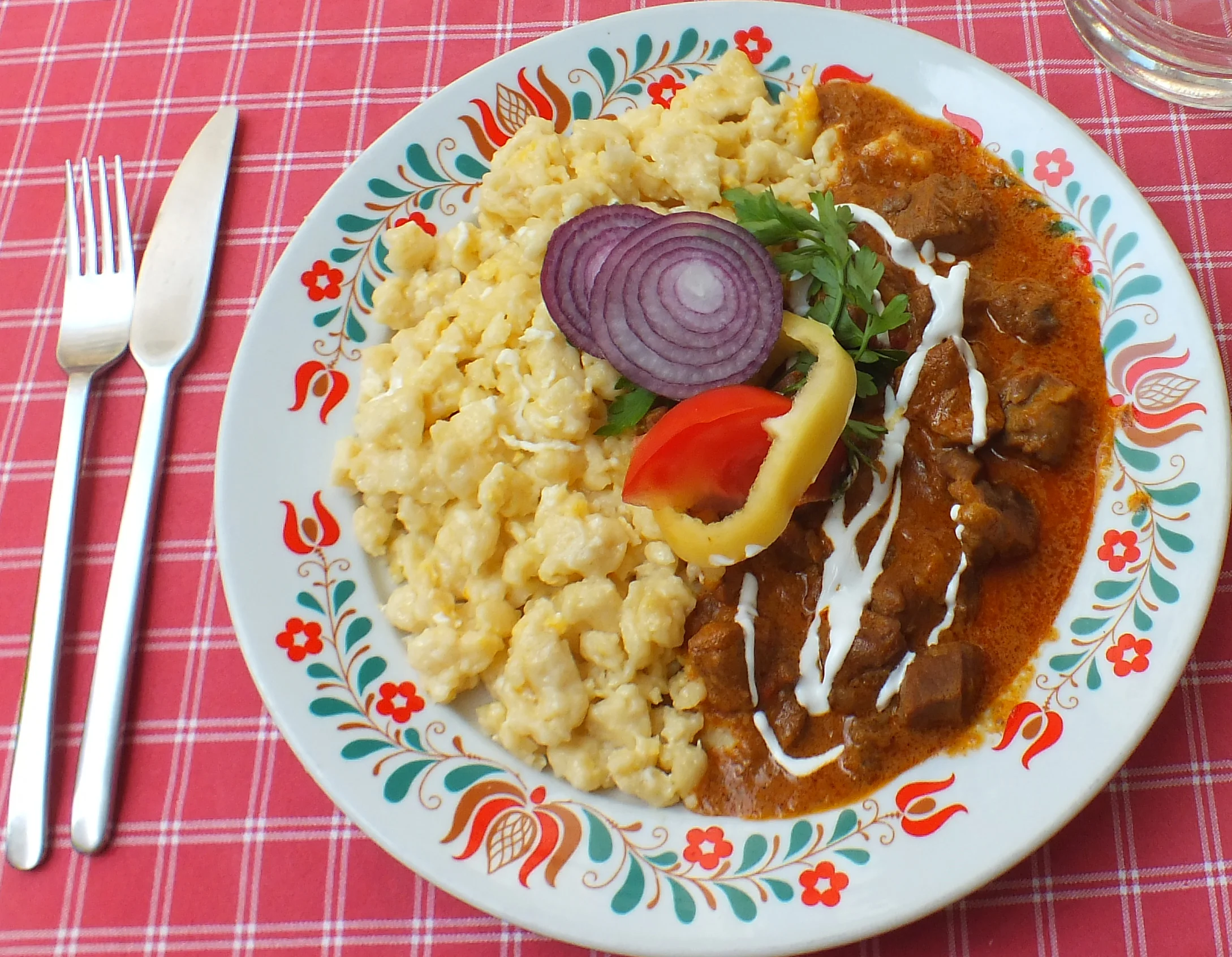
Beef stew is both a simple and sophisticated dish. It’s made with just a few ingredients, so every detail matters: the quality of the meat, the amount of onion, how the paprika is handled, the temperature, and patient cooking. A good stew isn’t soupy or dry, but rather coats the tender pieces of meat in a thick, glossy sauce.
The ingredients give it its character
The beef should be flavorful, well-marbled, and suitable for longer cooking. The onion is not merely an accompaniment: it is one of the foundations of the sauce’s texture. Paprika adds color and that familiar Hungarian aroma, but only if it isn’t burned. That’s why you should always add the paprika to the fat over low heat for only a short time.
The Rhythm of Roasting
The key to a good stew is a gradual cooking process. First, the onions soften; then the meat develops a crust; and finally, it simmers slowly with just a little liquid until tender. The goal isn’t to keep adding water, but to let the meat cook in its own juices and the spiced base. This way, the sauce becomes concentrated, full of flavor, and naturally thick.
Why does homemade nokedli go well with it?
Freshly torn nokedli is tender yet adds substance to the dish. It soaks up the stew’s sauce without overpowering the flavor of the meat. The pasta is best when it’s light, not floury, and not overcooked. Tossed with a little oil before serving, it won’t stick together.
Serving and Accompaniments
Beef stew should be served hot, with plenty of gravy. Pickles, fresh bread, or a light salad balance out the richness of the dish well. The dish is complete when all the elements are in balance: the meat takes center stage, the nokedli complements it, and the tangy side dish adds a refreshing touch.
On the Magyar Ízek menu, we prepare classic dishes with meticulous culinary craftsmanship and carefully selected ingredients.
